
Selling products in Switzerland requires customs clearance, as Switzerland is not part of the European Union. Rest assured: since January 1, 2024, Switzerland has removed customs duties on industrial products, including clothing, electronic devices, accessories, and many other items.
Additionally, if you import goods valued over 1,000 € from the EU, you must submit an export declaration to the customs authorities in your country. With this proof, the product is considered exported, meaning no French VAT — or other applicable VAT — is due.
DAP or DDP: Improving the Customer Experience
- DAP (Delivered At Place), also known as DDU (Duties Unpaid)
- DDP (Delivery Duty Paid)
For your information, there are options for group and individual customs clearance. Read the difference between DAP and DDP from Swiss Post for more information.
DAP
The waiting period is extended, and if the fees are too high, the customer can cancel their purchase. If a package costs less than €60 or €64, you can afford to send it DAP, as there will be no VAT or fees charged to the customer.
DDP
The online merchant takes care of everything, including import VAT and various fees. This provides the best possible customer experience: customers pay the amount displayed on your website at checkout, ensuring greater transparency.
The choice between DAP or DDP delivery is particularly important when it incurs additional costs for the customer.

Swiss VAT for eCommerce
- The standard rate
- The reduced rate
- The special rate for accommodation, which does not apply to e-commerce products.
For your information, if the VAT collected is less than €5 or €5.33, and your turnover is less than €100,000 — or approximately €106,699.10 — in Switzerland, you do not have to pay it.
The standard rate
The normal rate applies to all services that are not subject to the special rate.
The reduced rate
- Foodstuffs
- Medicines and dietary supplements
- Newspapers and books
- Cereals
- Plants
- Livestock and poultry
- Fish
- Other eligible products
The special rate for accommodation
The special rate applies to accommodation with breakfast, even when it is charged separately.
What to do if your revenue exceeds 100,000 CHF, or about 106,700 €, in Switzerland and abroad?
If this threshold is exceeded, your deliveries are considered national and you must register in Switzerland. You then become liable for VAT in Switzerland and will have to pay:
- 8.1% VAT for products at the normal rate
- 2.6% VAT if all your items are subject to the reduced rate
The sale prices displayed on your ecommerce site must include VAT when they are aimed at the Swiss market.
When you import goods into Switzerland via a DDP delivery, you pay VAT, but you can deduct it as input VAT. This avoids double taxation between the VAT charged to the customer and the VAT paid on import.
Since 2025, the marketplaces must collect VAT on sales of goods to Switzerland if the platform's revenue exceeds 100,000 CHF. This ensures tax equality between Swiss and foreign sellers.
A revenue exceeding 100,000 CHF — or 106,700 € — requires the designation of a tax representative in Switzerland.
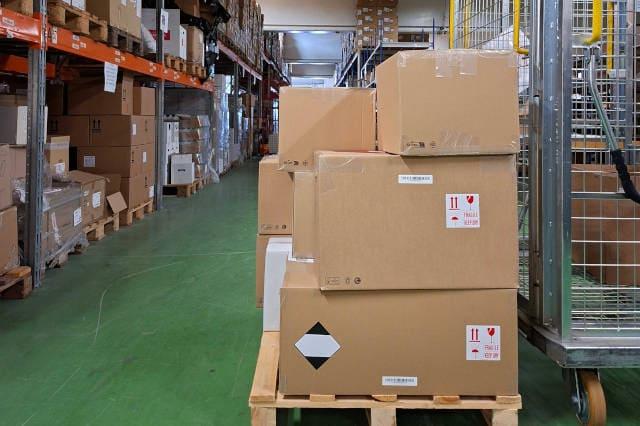
Carry Out Compliant Customs Clearance in Switzerland
DAP shipments
DDP shipments
However, it is advisable to inform the relevant service providers of your shipments in advance by email and provide them with all necessary information. You will find detailed information from the Swiss Post.
How to Obtain Fiscal Representation in Switzerland?
- Reduced processing times
- Cashless payment
- Electronic invoicing
Emaloja offers services for tax representation, commercial domiciliation, and other procedures related to the importation of goods into Switzerland, including warehousing.